More Stories
Back to Blog

Bank app, exchange or P2P: who holds the keys when you buy crypto in the UAE?
Team BlockX
November 20, 2026
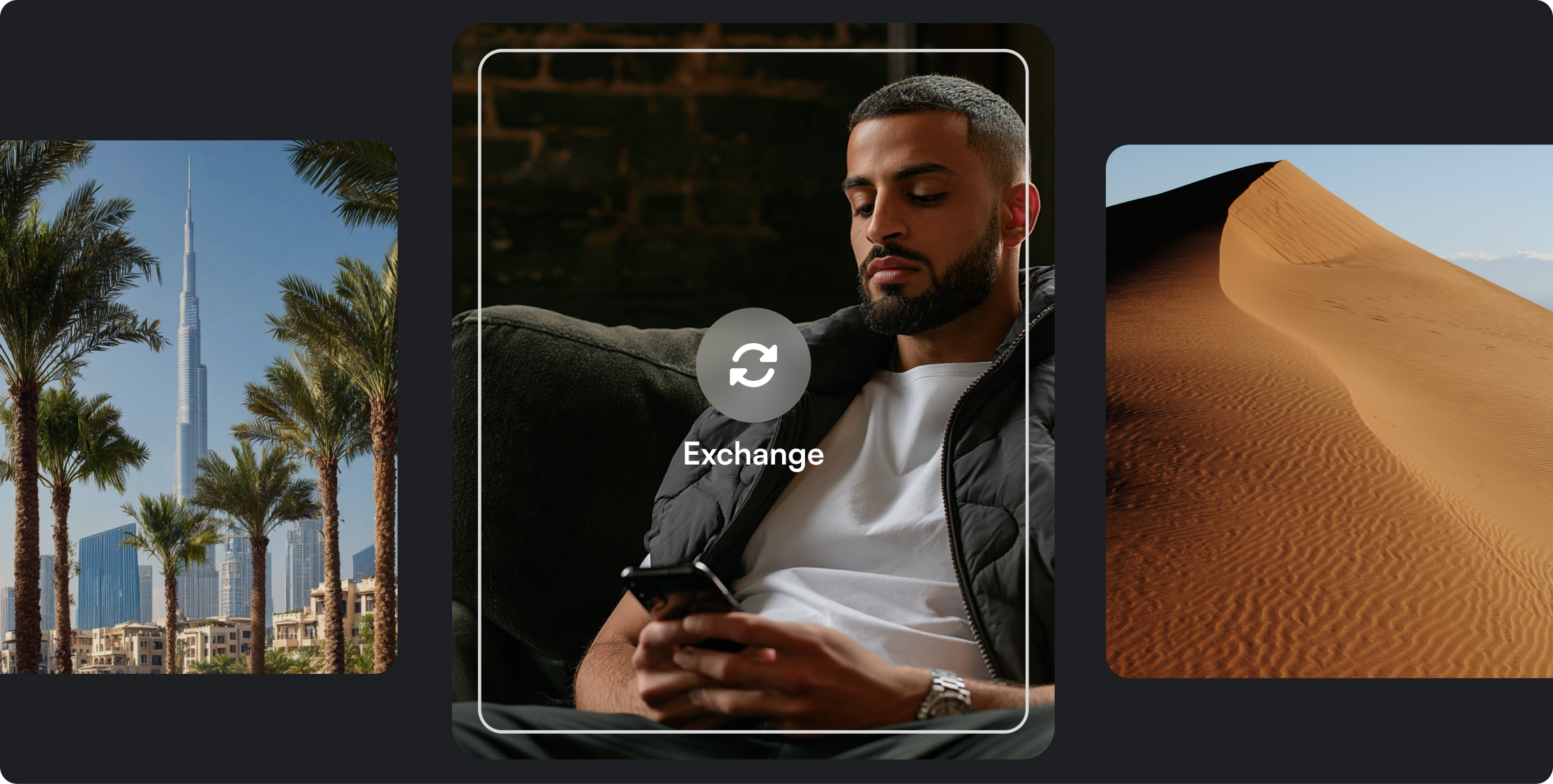
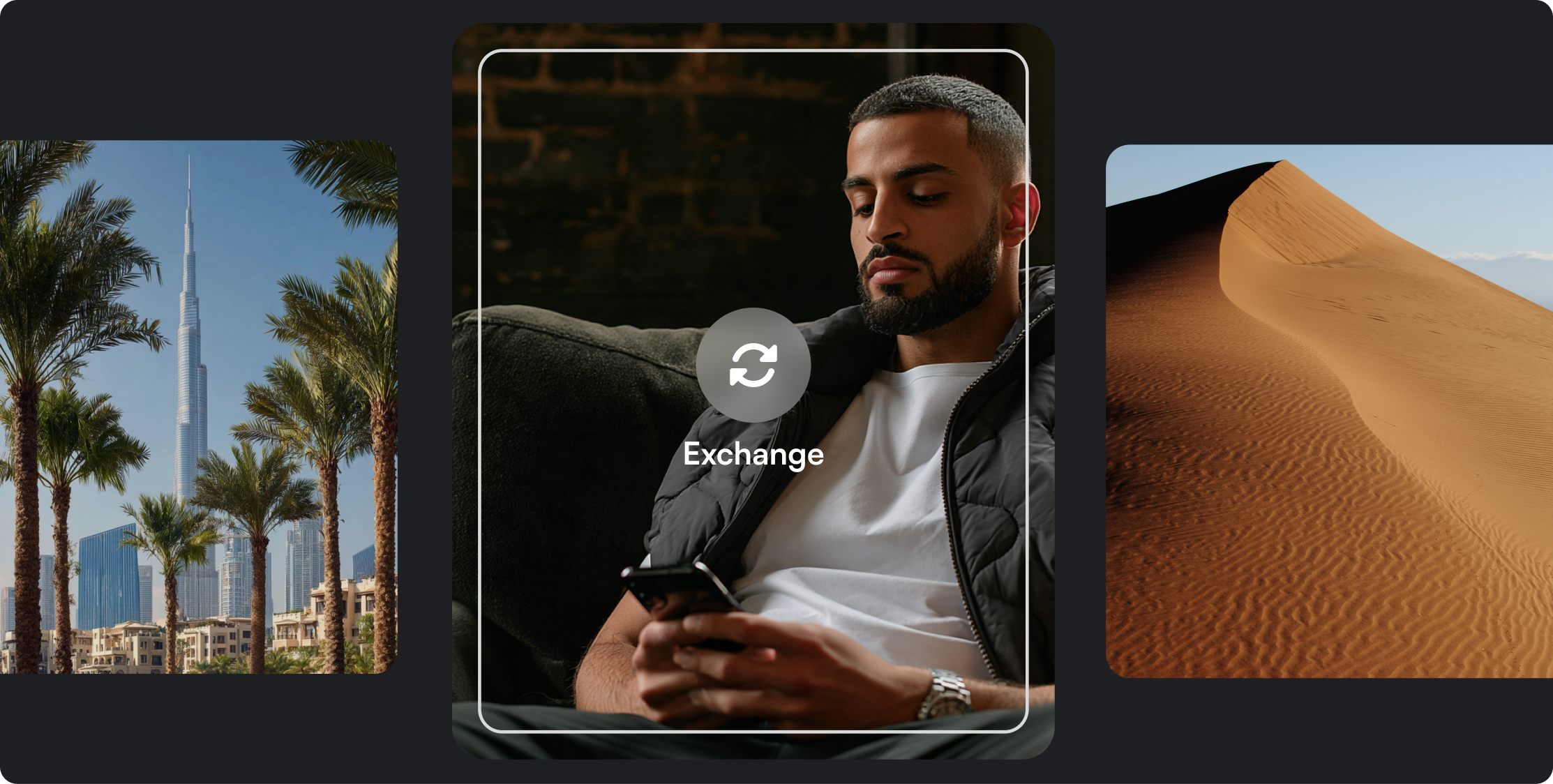
The short answer. Buying through a bank app is the easiest start, but the coins stay with the bank's partner. An exchange usually lets you withdraw to your own wallet, but holds the coins while they sit on the platform. P2P with escrow locks the seller's coins during the trade and then sends them to whatever wallet you name. The route that suits you depends less on the brand than on who you want holding your crypto once you've paid for it.
When people in the UAE buy crypto for the first time, they usually start by comparing prices. That matters, but it skips a more basic question: once the dirhams leave your account, who actually holds the coins? The answer changes how much control you have, what can go wrong, and who you would be relying on if it did. This guide walks through the three routes most UAE residents use, a bank app, a centralised exchange and a P2P trade with escrow, and looks at each one through that question.
Crypto is controlled by private keys, and whoever holds the keys controls the coins. When a provider holds them, the balance in your app is really a claim on that provider. It depends on their systems, their custodian and their terms of service. When you hold the keys yourself, no one can freeze your coins or lose them on your behalf. The flip side is that no one can recover them for you either, so a lost seed phrase or a transfer to the wrong address is permanent.
Neither model is automatically better. Our guide to custodial vs non-custodial crypto covers the trade-off in more depth. The point here is simply to know which one you are choosing.
Several UAE banks now let you buy crypto without leaving their app, through a licensed partner. RAKBANK offers trading in AED straight from a current or savings account; its crypto page says the service is provided by Bitpanda Broker MENA DMCC, a VASP regulated by VARA, and lists 21 cryptocurrencies (checked 9 November 2026). Emirates NBD's digital bank Liv has offered Liv X since 6 March 2025, letting users buy, sell and hold crypto. Gulf News, carrying a Bloomberg report, said the service runs on VARA-licensed Aquanow, with Zodia Custody, a Standard Chartered affiliate, holding the assets. Wio Bank announced a partnership with Fuze in November 2023 to offer virtual asset trading.
The appeal is obvious. You have already passed the bank's identity checks, the money is already in your account, and the fees are usually a single percentage per trade shown in the app, sometimes tiered by customer segment. For many people it is the lowest-friction way to start.
What you give up is control of the keys. The bank's partner or its custodian holds the coins, not you. RAKBANK's page lists custody as included free of charge. Liv X uses Zodia Custody. The bigger question is whether you can move the coins out at all. RAKBANK's page describes selling and withdrawing the proceeds to your RAKBANK account in AED, and does not mention sending crypto to an outside wallet. The Gulf News report on Liv X doesn't say either way. If you think you might want your coins in your own wallet later, check each bank's terms before you buy. For how UAE banks treat crypto-related transfers more broadly, see UAE banks and crypto.
On an exchange, you deposit dirhams, buy crypto, and see a balance on the platform. That balance is an entry in the exchange's ledger, and for as long as your coins stay there, the exchange holds the keys. Licensed exchanges require full identity verification, and once you have passed it, most let you withdraw crypto to your own wallet, subject to their limits and checks.
Costs come in layers: the trading fee, the spread between buy and sell prices, any fees for depositing or withdrawing AED depending on the banking route, and a network fee when you send crypto out. Taken one at a time they look small, so it is worth adding them up for the size of trade you have in mind.
The dirham side of exchanges is also getting smoother. AGBI reported in June 2026 that Binance customers can now deposit and withdraw dirhams directly through Abu Dhabi Commercial Bank (ADCB), with same-business-day settlement and daily limits of up to AED 7.2 million, under the UAE's Client Money Account framework. For a closer look at the two models, see P2P vs centralised exchanges.
In a P2P trade, you buy directly from another person. Escrow is what makes that workable between strangers. The seller's crypto is locked before you pay, you send dirhams from your own bank account to theirs, and the escrow releases the coins once the seller confirms the money has arrived. The dirham payment goes through your bank, which applies its own checks, and identity requirements on the platform side vary.
Who holds the keys depends on how the escrow is built. On a custodial P2P platform, the platform itself holds the seller's coins during the trade and often settles them into a platform wallet, so withdrawing to your own wallet is a separate step. With a smart-contract escrow, code on the blockchain holds the coins under public release rules, and on release they go straight to the wallet you named. In that design, self-custody is built in rather than added on.
What sets P2P apart isn't only who holds the keys. Because you trade with another person rather than a single provider, you aren't tied to one bank's app or one exchange's banking partners: you can pay from whichever account you already use, as long as it's in your own name. Prices are set by sellers competing for your trade rather than quoted by one provider, and the same marketplace model works across dozens of currencies, which matters if you move money between countries. A 2026 scan by Coinperps found Binance's P2P marketplace alone carried live USDT ads in 101 local currencies. None of this sits outside the rules: your bank still checks the payment, and UAE anti-money-laundering law still applies. But within them, P2P gives you more say over how the trade happens.
The smart-contract design is the one we are building at BlockX. It is a non-custodial P2P settlement network where trades are locked in on-chain escrow and you connect your own Web3 wallet, so we never hold your assets at any point. If that model fits how you want to buy, you can join the waitlist on our homepage. Whichever P2P platform you use, the rules for staying safe are the same. Confirm the coins are locked before you pay, pay only from an account in your own name, and as a seller, check your banking app before releasing. Our guide to smart contract escrow walks through each step.
On cost, the seller sets the price, so most of what you pay is built into their rate compared with the market. Some platforms add a fee on top, and on-chain settlement carries a network fee.
| Bank app | Centralised exchange | P2P with escrow | |
|---|---|---|---|
| Who holds the coins while you buy | The bank's partner or custodian | The exchange | The escrow: a platform, or a smart contract |
| Who holds them afterwards | The partner, unless the terms allow withdrawal | The exchange, until you withdraw | The wallet you named |
| Sending to your own wallet | Check the bank's terms | Generally yes, after KYC | Built in with smart-contract settlement; a separate step on custodial platforms |
| Which bank you can pay from | Only that bank | The banking routes the exchange supports | Any account in your own name that the seller accepts |
| Currencies and reach | AED, for the bank's own customers | The currencies the exchange supports where you live | Wide: large P2P marketplaces list 100+ local currencies |
| How the price is set | The bank's quote plus a percentage | The order book, plus fees | Sellers compete on rate; it can be above or below market |
| Identity checks | Your existing bank KYC | The exchange's own KYC | Varies by platform, plus your bank's checks on the AED payment |
| What it gives you | Convenience: start in minutes from an account you already have | Liquidity: deep markets and many coins | Control and choice: your keys, your bank, your price |
Whichever route you choose, a few questions will tell you most of what you need to know. Start with who actually provides the service, and whether that entity appears on VARA's public register or the relevant regulator's. Ask who the custodian is, and what happens to your assets if the provider stops operating. Find out whether you can withdraw crypto to a wallet you control, and on which networks. Add up every cost, including the spread and withdrawal fees, not just the headline trading fee. Finally, check how you get back to dirhams: can you sell back to AED, and which account does the money land in?
This isn't a ranking, and it doesn't tell you which route suits you. It doesn't cover tax, price risk, investment suitability or the security of any particular provider. Features and fees change, so the facts above are dated and drawn from the sources listed. Remember that holding your own keys removes provider risk but adds your own: a lost seed phrase or a mistaken transfer can't be undone.
This article is general information and is current as at the date shown above. Figures cited are snapshots from the sources listed and change over time. Nothing here is legal, tax or financial advice, and nothing on this website constitutes a financial product offer or solicitation.




Copyright © 2026
BlockX. All Right Reserved.

BlockX Digital Inc. is a technology infrastructure company. BlockX does not provide financial services, investment advice, or act as a money transmitter. Nothing on this website constitutes a financial product offer or solicitation.
