More Stories
Back to Blog

Do You Pay Tax on Crypto in the UAE? (The No-CGT Story)
Team BlockX
June 28, 2026
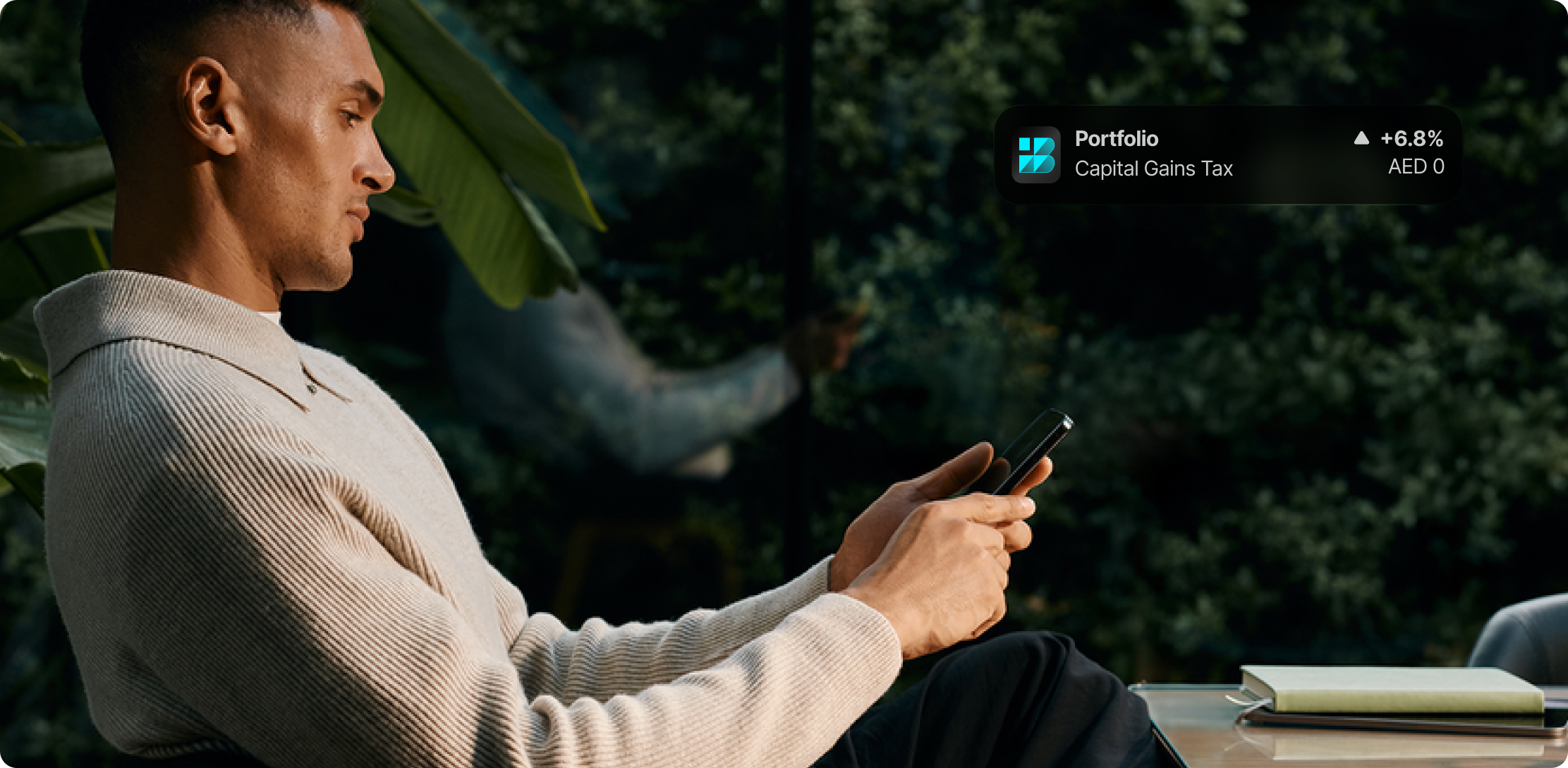

It's the question every crypto investor eyeing a move to Dubai asks first: do I actually pay tax on my crypto here? The short answer is the one that's made the UAE a magnet for crypto wealth — for individuals investing personally, there's no personal income tax and no capital gains tax on crypto. Buy, hold, sell, and the gains are yours.
But you may have heard "the UAE introduced a new crypto tax recently." That's worth clearing up, because the reality is almost the opposite of what the rumor suggests — and the real fine print is about reporting and how you're classified, not a new levy on your gains. Here's the complete, up-to-date picture for 2026.
For a natural person buying, holding, and selling crypto as a personal investment, the UAE simply doesn't tax the gains. There's no personal income tax, and personal investment income is explicitly outside the scope of UAE corporate tax. This applies whether you're trading Bitcoin, Ethereum, or stablecoins, and regardless of how large the gains are — spot trades, long-term holds, and personal staking all fall under the same 0% treatment.
This is the genuine, headline-grabbing reality, and for a personal investor who has actually relocated and built real ties in the country, it holds up under scrutiny. It's a big part of why the UAE — and Dubai in particular — has attracted so much crypto capital and talent.
This is the part worth getting precise on, because the rumor mill has it backwards.
In 2024, the UAE issued Cabinet Decision No. 100 of 2024, which amended the VAT rules to specifically address virtual assets. Rather than adding a tax, it formally exempted the transfer and conversion of virtual assets from VAT — and did so retroactively, all the way back to January 1, 2018. The FTA confirmed the clarification in 2025. In plain terms: spot trading, exchanging crypto for fiat, and moving tokens between wallets are VAT-exempt.
So the recent "change" actually reduced tax friction, not added to it. There are two sensible caveats:
For an ordinary personal investor, neither of these touches your trading gains.
If there's a genuine "watch this" item, it isn't a tax — it's reporting. The UAE signed on to the OECD's Crypto-Asset Reporting Framework (CARF) in 2025, with implementation from January 1, 2027 and the first automatic cross-border information exchanges expected in 2028, covering the 2027 reporting year.
What CARF means in practice:
The takeaway: the UAE stays tax-efficient, but it's becoming a compliant tax-efficient, not a hidden one.
Here's the distinction that catches people who only read the headline. The 0% story is for personal investment. The moment your activity starts to look like a business, different rules apply:
If you're moving to Dubai to invest your own portfolio, you're on the personal-investor side. If you're setting up a trading firm, fund, exchange, or service, you're a business — and structuring it correctly (often via a free zone) is where the real planning happens.
For relocating crypto investors and founders, the practical checklist looks like this:
This is general information, not tax advice — your situation deserves a qualified UAE tax professional, especially if you're relocating or setting up an entity.
Beyond the tax efficiency, the UAE is a place where crypto is genuinely usable. The dirham is pegged to the US dollar, which makes moving between AED and a dollar stablecoin like USDT or USDC unusually clean — useful for saving, spending, or sending money abroad. If you're getting set up, these guides help:
No. For individuals investing in a personal capacity, the UAE imposes no capital gains tax and no personal income tax on crypto — regardless of how much you gain.
Not a tax on your gains. The notable recent change, Cabinet Decision No. 100 of 2024, exempted crypto transfers and conversions from VAT, retroactive to 2018. The other big development is CARF reporting (from 2027), which adds transparency, not a new tax.
For personal investors, no — and such transfers and conversions are VAT-exempt. VAT can apply when you use crypto to buy goods or services, or to fee-based services like custody.
When your activity is treated as a business — for example, running a platform or service, commercial mining, or proprietary trading through a firm. Then 9% corporate tax applies on profits above AED 375,000, though free-zone entities may qualify for 0% on qualifying income.
Individuals generally don't file personal tax returns for crypto gains. Businesses must file corporate tax returns even if no tax is due.
Only if you genuinely establish residency and your activity is personal investing. If you're tax-resident elsewhere or run a crypto business, other rules can apply — get professional advice for your move.
The "no-CGT" story is real: in the UAE, personal crypto investors keep their gains, full stop. The recent VAT clarification made things friendlier, not harsher, and the only genuine fine print — CARF reporting and the business-versus-individual line — is about transparency and structure, not a surprise tax bill. For investors and founders planning a move to Dubai, few places combine this level of tax efficiency with real regulatory clarity and a crypto-native lifestyle.
Getting set up in the UAE? BlockX is the non-custodial, peer-to-peer marketplace built for the region, with AED among our launch currencies. Join the waitlist for early access.
This article is for general educational purposes only and is not tax, legal, or financial advice. Crypto tax treatment depends on your individual circumstances and residency, and rules can change; consult a qualified UAE tax professional about your situation. BlockX is a technology infrastructure company. It does not provide financial services, investment advice, or act as a money transmitter.




.png)
Copyright © 2026
BlockX. All Right Reserved.

BlockX Digital Inc. is a technology infrastructure company. BlockX does not provide financial services, investment advice, or act as a money transmitter. Nothing on this website constitutes a financial product offer or solicitation.
