More Stories
Back to Blog

Which Currencies Does BlockX Support? Buy and Sell Crypto in Your Local Currency
Team BlockX
June 19, 2026
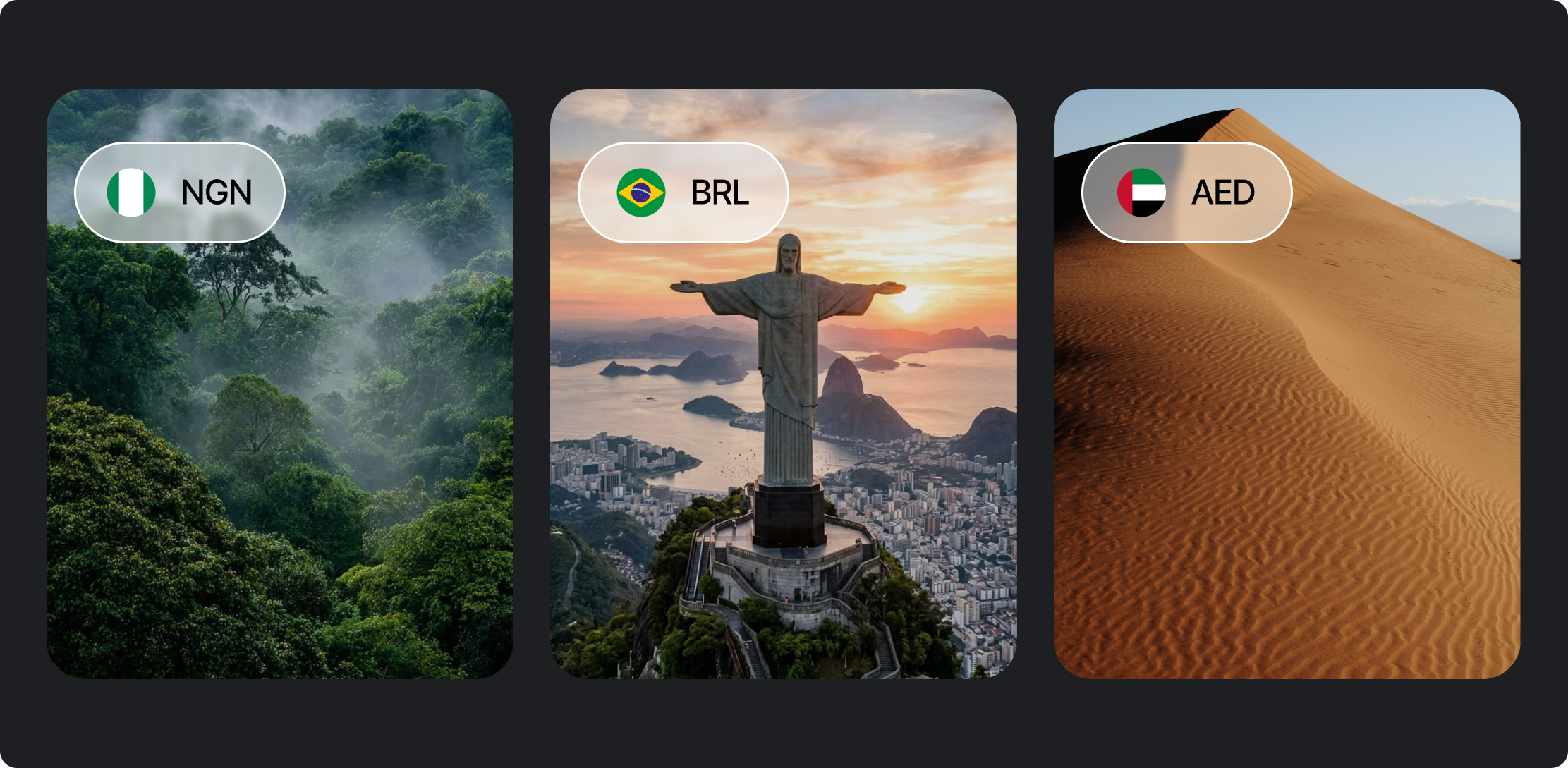

Getting into crypto shouldn't mean converting your money into some other currency first, or wrestling with a payment method you never use. At BlockX, the idea is simple: trade crypto in the currency you already earn and spend, using the local payment methods you already know — directly with verified merchants, while your funds stay yours the whole way.
Here's a clear rundown of the currencies BlockX supports at launch, how trading in your local currency works, and what you'll be able to buy and sell.
A quick summary before we dive in:
At launch, you'll be able to buy and sell crypto in ten currencies spanning five regions of the world:
The Americas
Europe & the UK
Middle East & Africa
This is our starting lineup, chosen to cover major markets across North America, Latin America, Europe, the Middle East, and Africa — and we'll keep adding more as we grow.
BlockX is a peer-to-peer (P2P) marketplace, which means you trade directly with another person — a verified merchant — rather than with a central exchange. Here's the flow:
The key thing to understand: we never hold your money. Your local-currency payment goes straight to the merchant, and the crypto sits in escrow — controlled by code, not by us — until the trade completes. Your assets stay under your control from start to finish. (For a deeper look at how this keeps both sides protected, see our guide on how escrow protects both sides.)
Because merchants provide their own payment options, the choices on BlockX are wide and refreshingly local. Depending on where you are and who you trade with, that can include:
We don't restrict you to a short, one-size-fits-all list — the available methods vary from country to country and merchant to merchant, so you can choose what's most convenient for you. When you browse, just filter by your preferred payment method to see matching offers.
At launch, BlockX supports a focused, high-demand set of assets:
And we're not stopping there — native BTC, native ETH, and non-EVM tokens are on the roadmap, so the range of what you can trade will keep expanding.
One more thing worth knowing: on BlockX you settle directly with a merchant at a rate the two of you agree on. No pool, no hidden spread, no surprises — just peer-to-peer settlement at the price you both accepted. It's a simple, transparent way to trade.
The ten launch currencies are just the beginning. Our goal is to operate globally — to make it possible for anyone, anywhere, to buy and sell crypto in their own currency with the payment methods they already use. As we expand, we'll keep adding currencies, regions, and assets, so if you don't see your currency yet, it's likely coming.
Trading in your own currency, the BlockX way, comes with real advantages:
BlockX is preparing to launch, and the best way to be first in line is to join the waitlist — you'll get early-access updates before the public launch.
Once we're live, getting started takes three steps: connect your wallet, find a matching offer in your currency and payment method, and complete your trade with escrow protecting you along the way. New to P2P? Our step-by-step guide to buying crypto and our guide to selling crypto for cash will have you trading with confidence.
At launch, BlockX supports ten fiat currencies: USD, AED, EUR, GBP, MXN, BRL, ARS, ZAR, NGN, and EGP — with more being added as we expand globally.
Yes. NGN, MXN, ARS, BRL, and ZAR are all among our launch currencies, so you'll be able to buy and sell crypto in them directly with verified merchants.
A wide range, because merchants set their own options — typically bank transfers, mobile money, cards, and local payment rails. The exact choices vary by country and merchant, and you can filter offers by payment method.
No. BlockX is non-custodial by design. Your local-currency payment goes directly to the merchant, and your crypto stays in smart-contract escrow until the trade completes — we never hold your funds.
USDT, USDC, any ERC-20 token, WBTC, and WETH at launch, with native BTC, native ETH, and non-EVM tokens planned for the future.
Our goal is to operate globally, starting with the launch currencies above and expanding from there. Join the waitlist to be notified as we roll out to more regions.
We're in pre-launch with the waitlist open now. Join it to get early-access updates before we go live.
BlockX is built so you can trade crypto in the currency you already use, with the payment methods you already trust — directly with verified merchants, at a rate you agree on, while keeping full control of your funds. We're launching with ten currencies across the Americas, Europe, the Middle East, and Africa, and we're just getting started on the road to going global.
Want to be among the first to trade? Join the BlockX waitlist for early access.
BlockX is a technology infrastructure company. It does not provide financial services, investment advice, or act as a money transmitter, and nothing here is a financial product offer or solicitation. This article is for general informational purposes only. Supported currencies and features may change as the platform develops.




Copyright © 2026
BlockX. All Right Reserved.

BlockX Digital Inc. is a technology infrastructure company. BlockX does not provide financial services, investment advice, or act as a money transmitter. Nothing on this website constitutes a financial product offer or solicitation.
