More Stories
Back to Blog

How to Deposit and Withdraw on BlockX — and Why Your Money Is Always Yours
Team BlockX
June 20, 2026
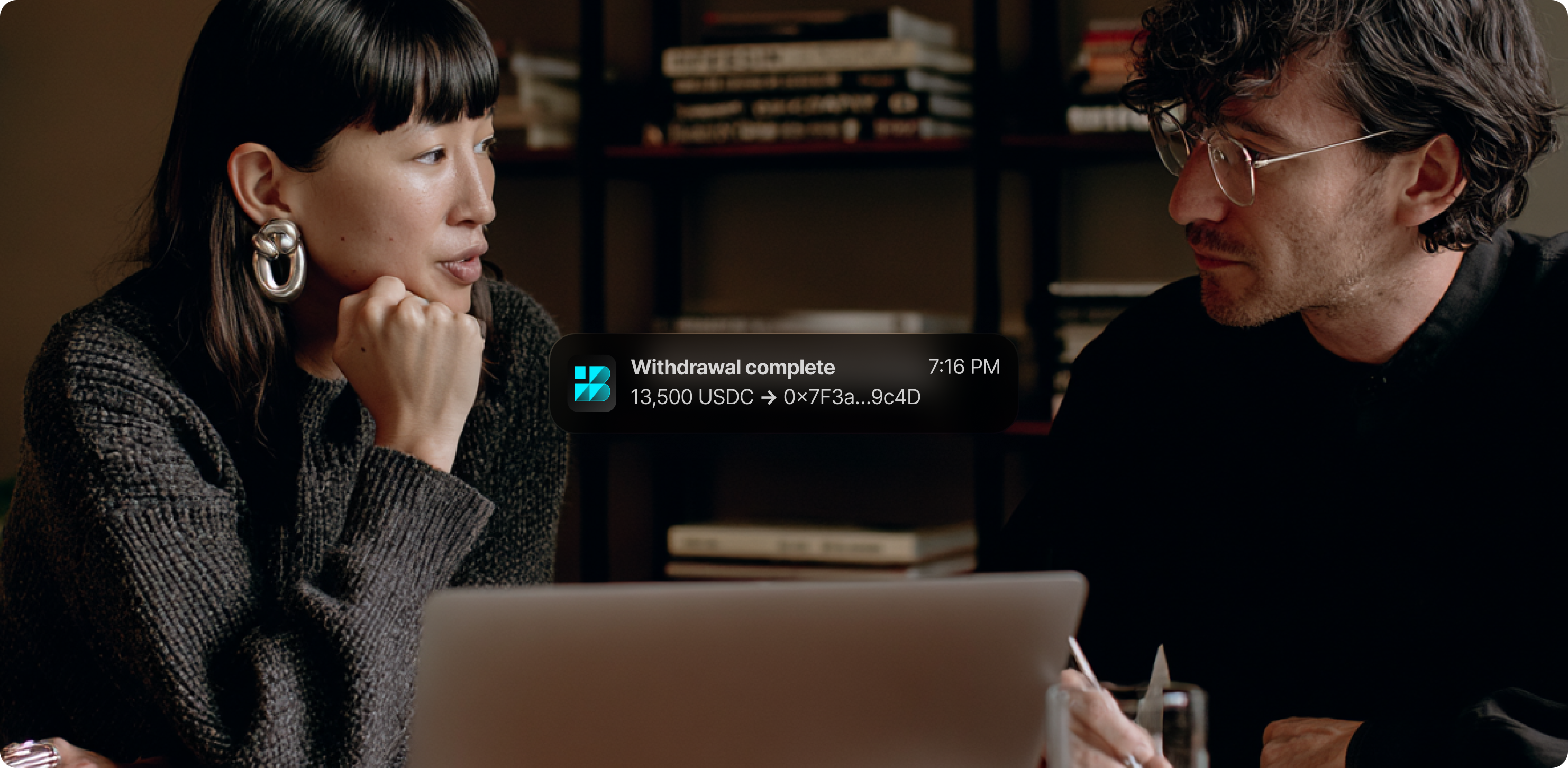

On most platforms, "depositing" means handing your money to a company and trusting them to give it back. You get a balance on a screen — an IOU — and if they freeze withdrawals, get hacked, or fail, your funds go with them.
BlockX is built on the opposite idea. Here, depositing never means giving up control. Your funds live in a smart-contract vault that only you can move money out of, they're locked only while you're actively trading, and you can withdraw them whenever you want — no approval, no waiting period, no gatekeeper. This is what "your keys, your coins" looks like in practice.
Here's exactly how deposits and withdrawals work, and why your money stays yours at every step.
This is the part that makes BlockX different, so it's worth understanding clearly.
When you deposit on a traditional exchange, your crypto goes into their wallets. They hold the keys; you hold a claim. On BlockX, a deposit moves your crypto into a Vault smart contract — transparent code on the blockchain, not a company account. We never take custody. The vault holds your funds, locks the exact amount needed only when you enter a trade, and releases everything else to you on demand.
In short: we never hold your funds. Ever. A deposit on BlockX is you placing your own crypto into a programmable safe that only you can open — not handing it to us.
Depositing is mainly for when you want to sell or post offers, since your crypto needs to be available to back a trade. It's quick:
For supported tokens like USDC, deposits can be gasless — you approve and deposit in a single step, keeping the process smooth and cheap. And because BlockX settles on low-cost networks, the small network fee to move your own funds is typically just pennies.
This is the heart of the non-custodial model. When you open a trade, only the exact amount for that specific order is locked in escrow — held safely by the smart contract until the trade completes. Everything else in your vault stays free, and you can withdraw it whenever you want.
Your funds are never pooled with other users', never lent out, and never sitting in a company account waiting to be frozen. The only thing that ever "locks" your crypto is your own decision to enter a trade — and even then, it's the contract, not us, holding it.
Withdrawing is exactly as simple as it should be:
There's no withdrawal request to be approved, no holding period, no daily cap set by us, and no support ticket. Because we never custody your money, there's nothing for us to "release" — your available balance is already yours, and a withdrawal is simply you moving your own funds. No one can stand between you and your money.
Here's a nice detail for buyers: you don't need to deposit or withdraw at all. When you buy crypto on BlockX, the moment the trade settles, the crypto is sent directly to your own external wallet — not parked in a vault balance you'd have to withdraw later. One step, straight to you.
And the fiat side stays just as clean: you pay the seller directly, using their payment method, in your local currency. (See the currencies and payment methods we support.)
BlockX never holds your fiat — not for a second. When you buy or sell, your local money moves directly between you and your counterparty through their payment method (bank transfer, mobile money, card, and more). The crypto side is protected by smart-contract escrow; the cash side flows peer-to-peer.
So neither your crypto nor your cash ever sits in a central BlockX pot. Both stay where they belong: with you and the person you're trading with.
The freedom to deposit and withdraw on your own terms isn't a feature we added — it's the foundation BlockX is built on:
Every freeze, withdrawal halt, and collapse in crypto's history has had the same root cause: someone else was holding the money. Custodial platforms can — and sometimes do — lock the doors when you most need access to your funds.
BlockX removes that possibility entirely. When the rails are non-custodial, there are no doors to lock. You transact freely, you keep custody throughout, and you withdraw whenever you choose, because the funds were never anyone's but yours. That's not just a safer way to trade — it's a more honest one. It's financial freedom you can actually rely on. (New to holding your own keys? Start with our plain-English guide to self-custody.)
Once you're on BlockX, the full cycle is simple: connect your wallet, deposit crypto into your vault to trade, and withdraw your available balance anytime you like — all while keeping full control of your funds. Every trade in between is protected by smart-contract escrow. (For how that protection works, see is P2P crypto trading safe.)
BlockX is launching soon, and the best way to be first in is to join the waitlist for early access.
Sent funds on the wrong network by mistake? See Sent USDT on the Wrong Network? What You Can Actually Recover.
Connect your self-custody wallet and deposit crypto into your vault — a smart contract you control. That balance is then available for trading. For supported tokens like USDC, deposits can be done gaslessly in a single step.
No. BlockX is non-custodial by design. Your crypto stays in a smart-contract vault only you control, and your fiat moves directly between you and your counterparty. We never hold your money.
You can withdraw your available (unlocked) balance to your own wallet at any time. There's no approval process, no holding period, and no withdrawal limit set by us — it's simply you moving your own funds.
Because we never custody your funds, there's no central party that can freeze them. Your available balance is always yours to move. The only time crypto is held is when you yourself lock it in an active trade's escrow — and it releases automatically when the trade completes.
No. When you buy, the crypto is delivered straight to your own wallet on settlement, and you pay the seller directly in fiat. Depositing is mainly for sellers who want crypto available to back their offers.
Only the exact amount tied to an active order is locked in escrow. The rest of your vault balance stays free and withdrawable. Nothing is pooled or lent out.
Deposits and withdrawals are your own on-chain transactions, so you only pay the network's fee — typically just cents on the low-cost networks BlockX uses. Trading itself carries a small, transparent fee.
On BlockX, depositing and withdrawing work the way they always should have: your crypto lives in a smart-contract vault you control, it's locked only while you're actively trading, and you can pull your available balance to your own wallet anytime — no permission required. Buyers receive crypto straight to their wallet, and fiat moves directly between you and your counterparty. At no point does BlockX hold your money. That's the whole point: the freedom to transact without ever surrendering custody.
Ready to trade on your own terms? Join the BlockX waitlist for early access.
BlockX is a technology infrastructure company. It does not provide financial services, investment advice, or act as a money transmitter, and nothing here is a financial product offer or solicitation. This article is for general informational purposes only. Features may change as the platform develops.




.png)
Copyright © 2026
BlockX. All Right Reserved.

BlockX Digital Inc. is a technology infrastructure company. BlockX does not provide financial services, investment advice, or act as a money transmitter. Nothing on this website constitutes a financial product offer or solicitation.
