Key takeaways
- "Tokenized stock" covers at least three very different things. Only one of them is actually a share. The others are a debt instrument or a contract that tracks a share's price.
- Most tokenized stocks sold to retail buyers outside the US do pass on dividends — but often not as cash. Several reinvest the dividend automatically by quietly increasing what each token is worth.
- Dividends from US companies usually arrive after US withholding tax. Where a product states the rate, it is 30%, and the United States has no income tax treaty with the UAE to reduce it.
- Voting rights are generally not included. Regulators in the US and the EU have both said so plainly.
- If the issuer fails, holders of most products have a claim on collateral that is sold for cash — not a share registered in their name.
Three things that go by the same name
The phrase "tokenized stock" sounds precise. It is not. In January 2026, staff at the US Securities and Exchange Commission set out a useful way of sorting the products that use it, and it is the clearest place to start.
- Shares the company itself puts on a blockchain. The token is the share. Galaxy Digital did this in September 2025, issuing its SEC-registered Class A shares on Solana through Superstate, a registered transfer agent. Holders are on the company's register, with the rights that come with that. Participation is limited to approved, identity-checked holders.
- Shares held by a custodian, recorded as tokens. In December 2025 the SEC gave the Depository Trust Company — the central depository behind US stock markets — a no-action letter to tokenize entitlements to certain stocks, ETFs and Treasuries, carrying "the same entitlements, investor protections and ownership rights". First live trades followed in July 2026. This is the existing ownership chain, moved onto new rails.
- Third-party products that track a share. A company you have probably never dealt with buys the real share, holds it at a broker, and issues you something else: a certificate, a note or a contract whose value follows the share price. Almost every tokenized stock a retail buyer outside the US can reach today falls into this group.
As SEC Commissioner Hester Peirce put it in July 2025, tokenized securities are still securities — and a token issued by a third party carries that third party's risk on top of the company's.
How the main products are built
A quick tour of the third-party products most often seen in 2026. The point is not to compare them for purchase, but to show how different the legal plumbing is behind tokens that look identical in a wallet.
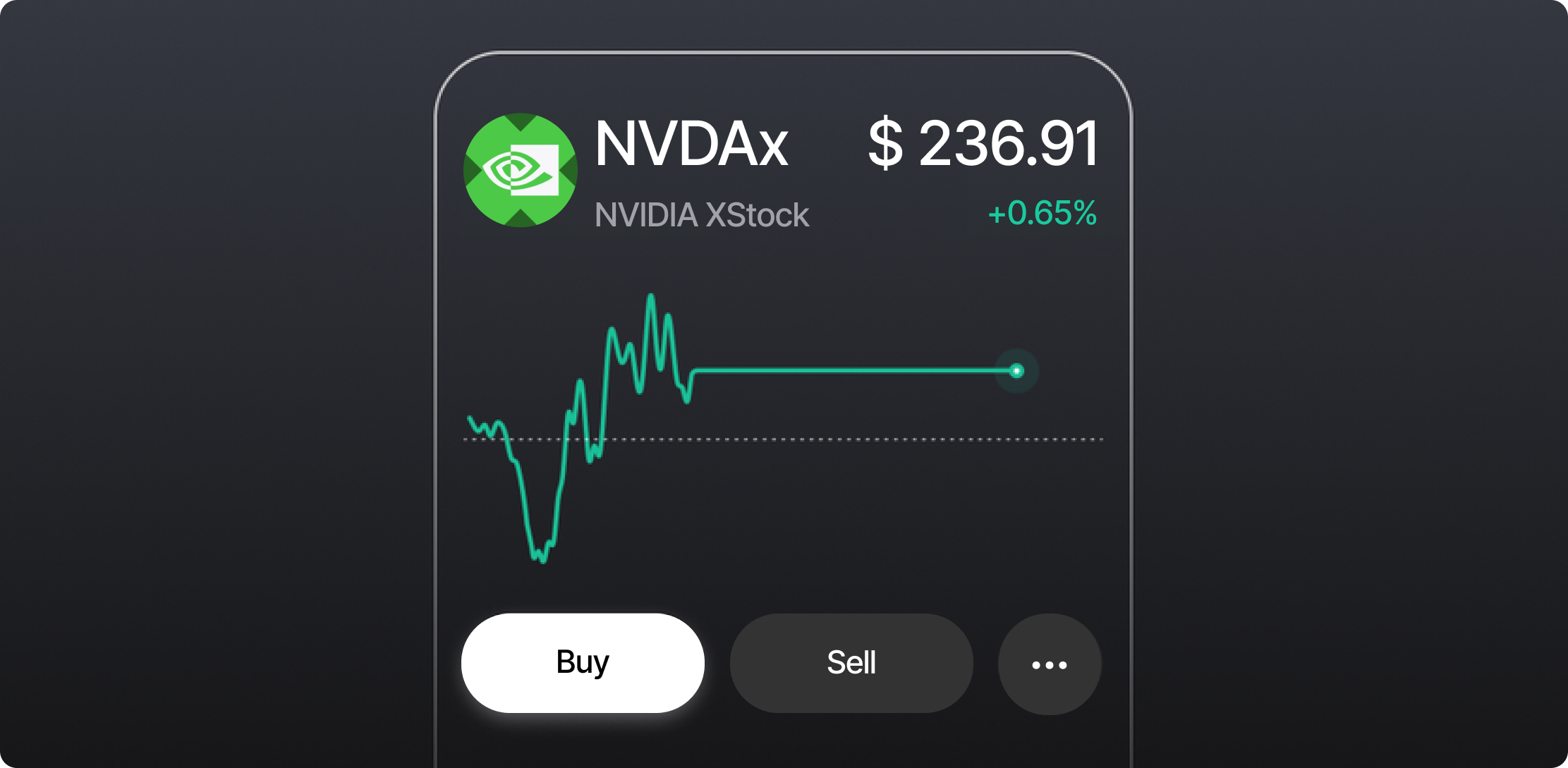
- xStocks (offered through Kraken, Bybit and others) are issued by Backed Assets (JE) Limited, a Jersey company. Legally they are tracker certificates — debt instruments — backed one-to-one by shares held mainly at a US broker. Kraken agreed to acquire Backed in December 2025.
- Robinhood's EU stock tokens began as derivative contracts between the customer and Robinhood Europe. Robinhood's own wording is direct: you are not buying the actual stocks. A newer version launched in July 2026 is issued as tokenized debt securities by a Jersey entity — and the UAE is on its restricted list.
- Ondo Global Markets tokens are issued from the British Virgin Islands. Ondo states that they "are not themselves stocks" and do not give holders rights to receive the underlying assets. An independent security agent holds a first-priority claim over those assets for token holders.
- Dinari dShares are tokens each matched to a share held at Dinari's own US broker-dealer.
- bStocks, closer to home, are certificates issued by an Abu Dhabi Global Market vehicle. The prospectus for a Salesforce bStock was approved in September 2026 and describes a beneficial interest in shares held at a US broker. They are not offered to US persons.
So, do they pay dividends?
Usually yes — but how the money reaches you varies more than most people expect.
- Reinvested through a multiplier. xStocks, Ondo tokens and bStocks do not send you cash. When the company pays a dividend, the issuer reinvests it and raises a multiplier, so each token now represents slightly more than one share. Bybit's help pages say dividends are "not paid separately as cash". Your token count may stay the same while its value rises.
- Paid in cash. Robinhood's EU stock tokens pay dividends in euros. Dinari pays in a dollar stablecoin to holders on record on the ex-dividend date, with a minimum payout of ten cents.
Neither approach is better in principle. What matters is knowing which one you have, so that a dividend which arrives as a slightly higher token price is not mistaken for nothing arriving at all.
The tax most people miss
Dividends from US companies paid to non-US holders are normally subject to US withholding tax before they reach anyone. Kraken describes the xStocks reinvestment as a "net dividend (after 30% US withholding tax)", and the bStocks prospectus states the same 30% rate.
Investors in many countries can reduce that rate through a tax treaty. The United States does not have an income tax treaty with the UAE, and none of the products reviewed for this article says it applies a reduced treaty rate for any holder. For a UAE resident, the realistic assumption is that roughly a third of each US dividend is gone before it is reinvested or paid out.
The UAE side of the picture — no personal income tax — does not change what is withheld at source in the US.
Splits, mergers and other corporate events
Companies split shares, merge and get taken over. Each product handles this differently:
- xStocks adjust the multiplier, and Kraken says holder balances update automatically with no action required.
- Robinhood's EU tokens change your quantity — a three-for-one split turns one token into three — and if a company is acquired, holders may receive a cash payment in euros.
- Ondo says splits are reflected in the token so holders keep the same economic exposure.
The rule of thumb: in a token, corporate events are handled by the issuer's terms, not by your rights as a shareholder — because you are not one.
Voting: generally not included
This is where the gap between "exposure" and "ownership" is clearest. Kraken's risk disclosure for xStocks says they carry no voting rights and no legal claim to the underlying stocks, and are not sponsored by the companies they track. The European Securities and Markets Authority said in September 2025 that tokenized stocks "typically do not confer shareholder rights", and warned of a specific risk that investors misunderstand what they are buying.
There are partial exceptions. In August 2026 Kraken's parent company began working with Broadridge so that eligible xStocks holders can submit voting preferences — the issuer votes, informed by holders. And the first two categories above, company-issued and depository-issued tokens, keep full voting rights. But in the product most retail buyers actually reach, assume you have no vote.
What you hold if something goes wrong
For a third-party token, you are a creditor of the issuer, not an owner of the share. The protections are in the legal structure:
- xStocks: if the issuer defaults, an independent security agent can take control of the collateral accounts, sell the underlying shares and distribute the proceeds. You receive cash from that sale, not shares. Kraken's own risk disclosure also warns that if the custodian holding the shares becomes insolvent, access may be delayed or impossible, with partial or total loss.
- Ondo: holders are protected by a first-priority security interest over the underlying assets, which the issuer describes as bankruptcy-remote.
- Robinhood's derivative tokens: you are a counterparty to Robinhood Europe and could lose up to the full amount if Robinhood became insolvent.
History offers two reminders. In 2021 Binance stopped offering stock tokens after Germany's financial regulator warned they likely breached securities rules, giving users 90 days to sell or move them. In 2022 FTX's stock tokens became entangled in FTX's collapse, and the provider of the underlying shares said it did not answer questions on behalf of end users.
And in July 2025 OpenAI publicly stated that "OpenAI tokens" sold by Robinhood in Europe "are not OpenAI equity", and that it had not partnered with Robinhood. The tokens tracked an interest in a special purpose vehicle. It is the cleanest illustration of the point of this article: a token named after a company is not a share in that company.
Where the UAE stands
Under the federal definition, a virtual asset excludes digital representations of securities. In plain terms, a tokenized share is treated as a security, not as crypto, in the UAE. That puts it under securities regulators — the Securities and Commodities Authority onshore, the Financial Services Regulatory Authority in Abu Dhabi Global Market, and the Dubai Financial Services Authority in DIFC, which opened a tokenization sandbox for equities, bonds and sukuk in 2025.
Availability depends on the product and the platform, and changes often. Some issuers exclude the UAE outright; others are reachable. The existence of a token on a platform you can access says nothing about whether it was approved for sale to you.
Five questions to ask about any tokenized stock
- Who is the issuer, and where is it incorporated? That is who you have a claim against.
- Is it a share, a debt instrument or a derivative? The terms or prospectus will say. If you cannot find out, that is an answer too.
- How are dividends handled, and after what withholding? Cash, multiplier, or nothing at all.
- Where are the real shares held, and who can act on them if the issuer fails? Look for a named custodian and a security agent.
- Is it offered where you live? Check the issuer's restricted jurisdictions, not just the platform's.
Related guides
This article is general information about how tokenized stock products are structured and is current as at the date shown above. Product terms, availability and tax treatment change; check the current documents of the specific issuer. A tokenized stock is not the same as holding the listed share. Nothing here is investment, legal or tax advice, and nothing on this website constitutes a financial product offer or solicitation.





.png)

